

Mutation
Genetic mutations involve structural, usually transmissible change in DNA or RNA within a cell or organism. Somatic mutations affect the cells of an organism, yet are not trasmitted to the next generation unless they affect the germline, those cells, such as ova and sperm that are committed to reproduction.
Sources of variation:
¨ alternative exons ¨ Alu elements ¨ alternative splicing ¨ alternative 3' splicing ¨ alternative 5' splicing ¨ cassette exons ~ Conserved & Consensus ~ Deletion ~ Duplication ¨ epigenetic mechanisms ~ Epistasis ¨ ESE ¨ ESS ¨ exon skipping ¨ gene regulation and biological evolution ¨ genetic variation ~ Insertion ¨ intron retention ¨ ISE ¨ ISS ¨ ¨~ Inversion ~ Meiosis
~ mispairing ~ Non-disjunction ~ Recombination ~ Substitution ~ Translocation
~ Horizontal Gene Transfer ~ Conjugation ~ Transduction ~ Transformation
Table Mechanisms of Biological Evolution : Gene Regulation in E.coli :
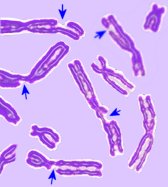 Damage to DNA can be caused by mutations such as replication errors or incorporation of mismatched nucleotides (substitution errors – transitions and transversions). DNA can suffer single or double-strand breaks (left). DNA damage can result from unintentional and intentional environmental mutagens such as oxygen radicals, hydroxyl radicals, ionizing or ultraviolet radiation, toxins, alkylating agents, and chemotherapy agents, particularly anti-cancer drugs. Cells have evolved mechanisms for repair of DNA, and all organisms, prokaryotic and eukaryotic, utilize at least three enzymatic excision-repair mechanisms: base excision repair, mismatch repair, and nucleotide excision repair.
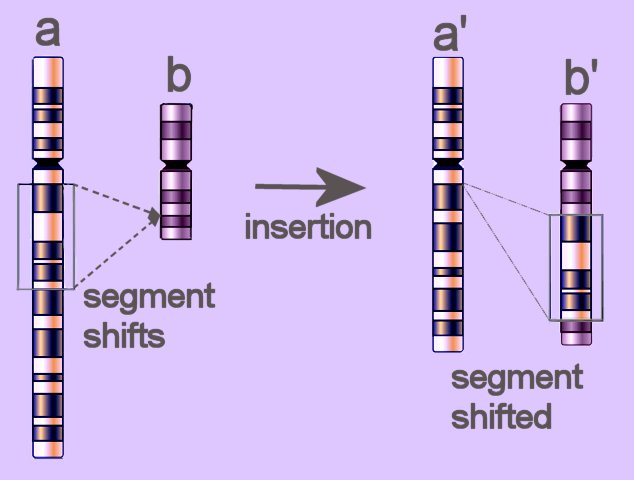
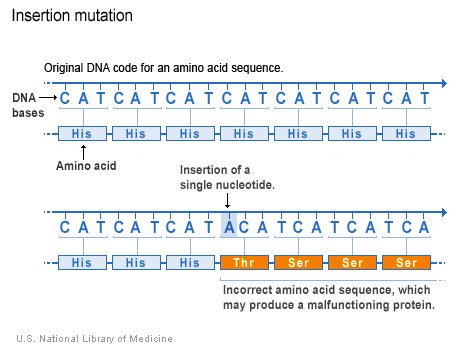
Transmissible mutations affect the germline or result from errors during replication and cell division. Gene mutations have small-scale effects on sequences of nucleic acids, while chromosomal mutations involve larger-scale disruption of genetic material. Sequence mutations result from nucleotide alterations, insertions, deletions, or re-arrangements of gene segments, while, on a larger scale, chromosomes are altered during replication and cell division by deletion, duplication, inversion, recombination, translocation, transposition, and non-disjunction.
Depending upon their effects upon an organism within a particular environment, mutations may be neutral, beneficial, or deleterious. The commonest mutations affect single nucleotides (point mutations or SNPs). Because the genetic code is redundant, many single nucleotide substitutions are neutral. Insertion of mobile genetic elements, transposons and retrotransposons, increases genetic variability. The human genome, for example, includes approximately 500,000 Alu elements located within introns, and 25,000 of those could become new exons, coding for polypeptide sequences, by undergoing a single-point mutation.
As a result of alternative splicing, mutations that alter a splice site or a nearby regulatory sequence can have subtle effects by shifting the ratio of the resulting proteins without entirely eliminating any form. Alternative splicing also generates new polypeptide combinations from already existing code. Recently, researchers have demonstrated that modification of regulation of a single gene has enabled rapid phenotypic speciation in sticklebacks.
HHMI 30 New Mutations per Lifetime : Videos - external - Artificial Life an excerpt from the PBS series Nova Science Now - A Mutation Story on the reciprocal relationship between malaria and the sickle-cell trait - Double Immunity plague and HIV - Why Animals Mate Non-randomly: Tale of the Peacock concerning non-random mating - Sweaty T-Shirts and Human Mate Choice on pheromones - Is Love in Our DNA - poll on how we choose our mates -
External : Transposons part 1, transposons part 2 : Barbara McClintock and mobile genetic elements :

Sources of variation:
¨ alternative exons ¨ Alu elements ¨ alternative splicing ¨ alternative 3' splicing ¨ alternative 5' splicing ¨ cassette exons ~ Conserved & Consensus ~ Deletion ~ Duplication ¨ epigenetic mechanisms ~ Epistasis ¨ ESE ¨ ESS ¨ exon skipping ¨ gene regulation and biological evolution ¨ genetic variation ~ Insertion ¨ intron retention ¨ ISE ¨ ISS ¨ ¨~ Inversion ~ Meiosis
~ mispairing ~ Non-disjunction ~ Recombination ~ Substitution ~ Translocation
~ Horizontal Gene Transfer ~ Conjugation ~ Transduction ~ Transformation
Table Mechanisms of Biological Evolution : Gene Regulation in E.coli :
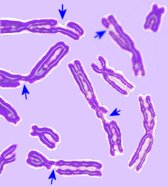 Damage to DNA can be caused by mutations such as replication errors or incorporation of mismatched nucleotides (substitution errors – transitions and transversions). DNA can suffer single or double-strand breaks (left). DNA damage can result from unintentional and intentional environmental mutagens such as oxygen radicals, hydroxyl radicals, ionizing or ultraviolet radiation, toxins, alkylating agents, and chemotherapy agents, particularly anti-cancer drugs. Cells have evolved mechanisms for repair of DNA, and all organisms, prokaryotic and eukaryotic, utilize at least three enzymatic excision-repair mechanisms: base excision repair, mismatch repair, and nucleotide excision repair.
Transmissible mutations affect the germline or result from errors during replication and cell division. Gene mutations have small-scale effects on sequences of nucleic acids, while chromosomal mutations involve larger-scale disruption of genetic material. Sequence mutations result from nucleotide alterations, insertions, deletions, or re-arrangements of gene segments, while, on a larger scale, chromosomes are altered during replication and cell division by deletion, duplication, inversion, recombination, translocation, transposition, and non-disjunction.
Depending upon their effects upon an organism within a particular environment, mutations may be neutral, beneficial, or deleterious. The commonest mutations affect single nucleotides (point mutations or SNPs). Because the genetic code is redundant, many single nucleotide substitutions are neutral. Insertion of mobile genetic elements, transposons and retrotransposons, increases genetic variability. The human genome, for example, includes approximately 500,000 Alu elements located within introns, and 25,000 of those could become new exons, coding for polypeptide sequences, by undergoing a single-point mutation.
As a result of alternative splicing, mutations that alter a splice site or a nearby regulatory sequence can have subtle effects by shifting the ratio of the resulting proteins without entirely eliminating any form. Alternative splicing also generates new polypeptide combinations from already existing code. Recently, researchers have demonstrated that modification of regulation of a single gene has enabled rapid phenotypic speciation in sticklebacks.
HHMI 30 New Mutations per Lifetime : Videos - external - Artificial Life an excerpt from the PBS series Nova Science Now - A Mutation Story on the reciprocal relationship between malaria and the sickle-cell trait - Double Immunity plague and HIV - Why Animals Mate Non-randomly: Tale of the Peacock concerning non-random mating - Sweaty T-Shirts and Human Mate Choice on pheromones - Is Love in Our DNA - poll on how we choose our mates -
External : Transposons part 1, transposons part 2 : Barbara McClintock and mobile genetic elements :
Labels: deletion, germline, insertion, inversion, mutation, non-disjunction, recombination, translocation, transposition
| 2 Guide-Glossary